Strengthening the trust funds that sustain protected areas
FOS is supporting conservation trust funds, such as FAPBM in Madagascar and MNLF in Mongolia, to develop the right frameworks and turn available data into better strategic decisions for protected areas.
Conservation trust funds have become one of the pillars of long-term conservation finance. Around the world, they channel sustainable funding to protected and conserved areas. They often function as the most stable source of support these areas can count on.
As their role grows, so do two questions at the heart of their mandate: is our funding working, and how do we decide where to invest for the greatest and most durable impact? Decisions of that weight are easier to make well when they rest on clear, shared evidence that answers actionable questions.
Yet many trust funds tell us the same thing: data may exist, but it is scattered across reports and spreadsheets, hard to compare, and hard to turn into a decision. The challenge is rarely a lack of information. Rather, it is having the right framework, the right tools, and the internal capacity to make sense of it all.
How FOS supports trust funds
At FOS, we work alongside trust funds to strengthen the systems behind their strategic decisions. In practice, this means co-developing:
- strategic frameworks that connect a trust fund's mission to the outcomes it wants to see on the ground;
- effectiveness assessment approaches, grounded in the outcomes-based framework of the World Commission on Protected Areas (WCPA) and in the Conservation Standards;
- management information systems and dashboards that bring scattered data into one clear, shared picture;
- and, crucially, the internal capacity for the fund's own team to own, run and keep improving these systems.
Two recent partnerships, on opposite sides of the world, show what this looks like in practice.
FAPBM, Madagascar
As of 2026, FAPBM (Madagascar Protected Areas and Biodiversity Fund) is the biggest trust fund in Africa with a capital of 157 million USD. It is one of the main funders of Madagascar's protected area network, sustaining 75 out of the 146 protected areas. As such, it contributes to the conservation of species and habitats found nowhere else on Earth and supports the communities that live alongside them.
As the trust fund grows, as new funding opportunities appear, and as it weighs supporting more protected areas, the volume of data also grows and strategic choices become harder. In recent years, this has highlighted three questions:
- Are we funding the right protected areas?
- Are we funding them well?
- Are we having an impact?
To answer these questions, FOS Europe worked for two years alongside the FAPBM team, with the support of the Hempel Foundation, to clarify FAPBM's strategic framework, strengthen its monitoring system, and build a way to make decisions grounded in real data. Together, we reviewed the current strategic plan through a mid-term evaluation, mapped and reflected on the trust fund's internal processes and team structure in light of these new challenges, and co-developed a strategic framework together with a Management Information System (MIS) and interactive dashboard that brings the strategically relevant information into one place.
The result gives FAPBM a clear, shared picture to support well-informed choices as a donor. From the start, the aim was to support the team's growth and build ownership: the Monitoring, Evaluation, Accountability and Learning technical team now manages and develops the system itself. The MIS and dashboard were built in collaboration with Mike Honey and Annette Stewart, whose craft was central to shaping the tool alongside the FAPBM team.
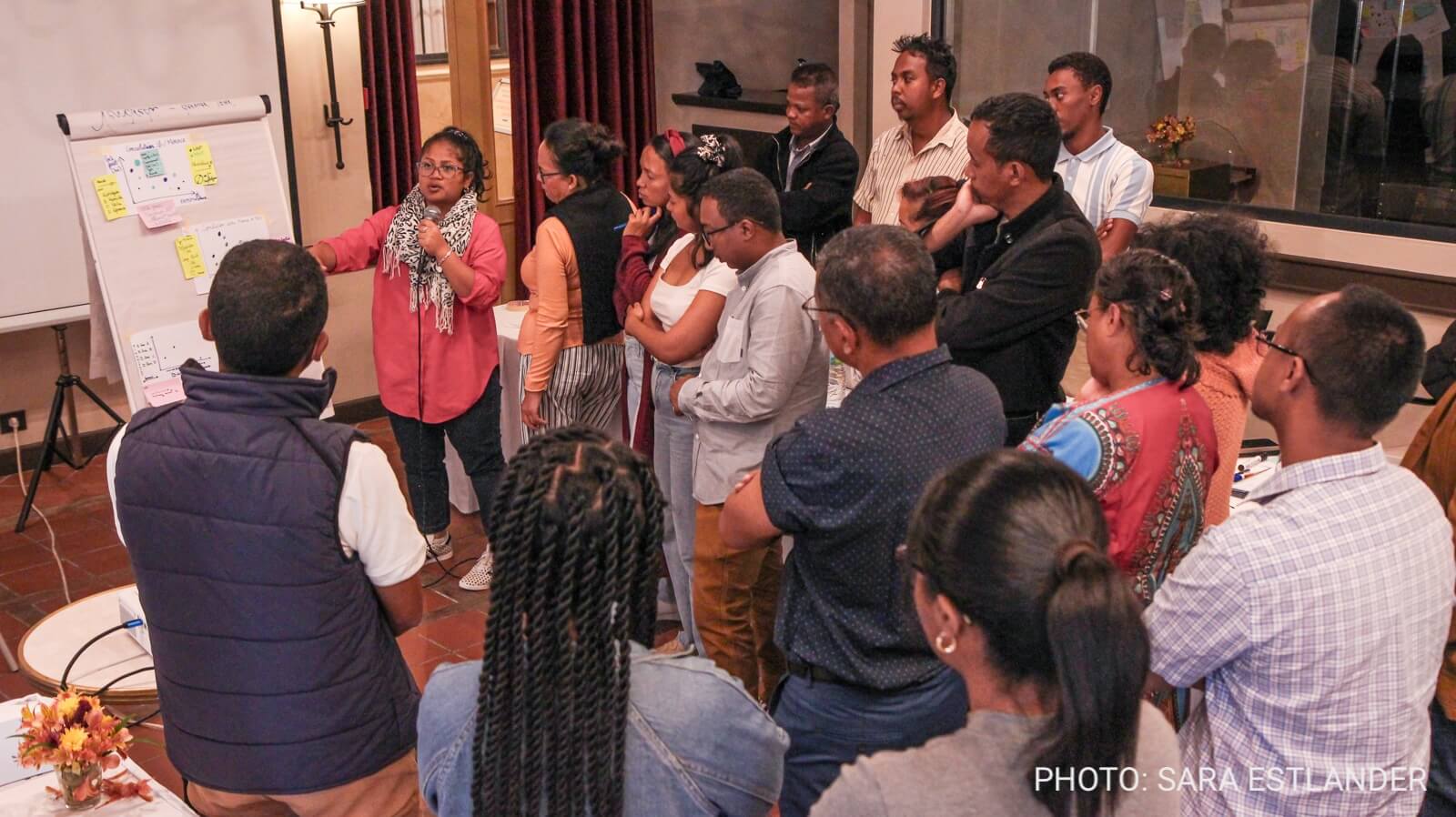
The FAPBM team in the MIS Dashboard testing workshop with FOS, February 2026
|
“This is a major first for FAPBM. After nearly 20 years of existence, marked by significant achievements but also by recurring questions about the actual impact of our interventions, this system represents an important milestone in our ability to better document, measure and demonstrate the changes we contribute to. Our expectation is that it will provide us with reliable and up-to-date information to guide our decisions, improve our interventions and ultimately strengthen our long-term impact on protected areas, biodiversity and local communities." Ranto Randriantsoa | Programs and Impacts Director, FAPBM |
MNLF, Mongolia
On the other side of the world, FOS Europe has partnered with the Mongolian Nature's Legacy Foundation (MNLF) to design the Mongolia Protected Area Accelerator Program. The aim was to strengthen the planning, management and financial sustainability of Mongolia's protected areas.
Central to this effort was a tailor-made Protected Area Readiness Self-Assessment Tool. The tool is based on the recently developed WCPA framework for assessing protected area effectiveness and field-tested with two Mongolian protected areas.
The Tool is a guided framework that PA management teams use themselves with support from a trained coach. It creates a structured picture of how well a protected area is set up and managed across governance, design, planning, capacity, implementation, and monitoring.
For MNLF and the PA teams, a key benefit is that it surfaces each team's strengths and priority gaps. Those findings determine where Readiness Grant support will add most value and whether a PA is ready to progress towards more substantial grants into the next phase of the Accelerator Program.
Alongside the tool, FOS Europe helped design the Accelerator Program itself. The Program provides a way to identify investment priorities: it highlights specific effectiveness gaps, establishes clear criteria for selecting the protected areas that take part, and builds capacity within the MNLF team, its partners, and local conservation coaches so they can use assessment results in practice.
We have also assisted MNLF in developing a theory of change for the whole Eternal Mongolia Project Finance for Permanence (PFP).
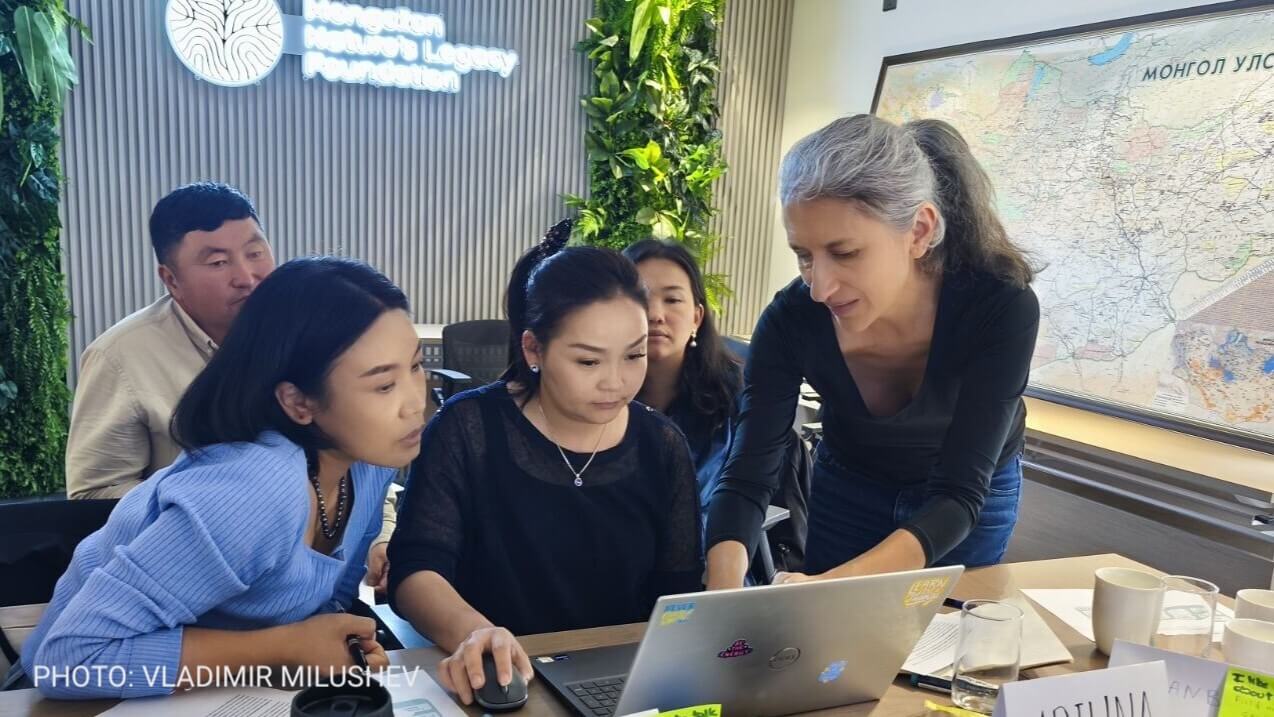
Training for local conservation coaches supporting PA teams funded by MNLF, June 2026
What we are learning
In these two very different trust funds and contexts, we see one common thread: better decisions start with strong frameworks and actionable information in the right hands. The value is not a dashboard or an assessment tool in itself. Rather, the value arises when a fund is able to see its portfolio clearly, direct limited resources to where they matter most, and learn and adapt over time. And because the capacity is built inside the trust fund, the benefit stays after FOS’s work ends.
As trust funds across Africa, Latin America and beyond take on a bigger strategic role, we see a growing appetite for shared learning between trust funds that face similar challenges despite very different ecological and institutional settings. FOS looks forward to continuing these conversations with the wider community of environmental trust funds.
If your trust fund is thinking about how to strengthen the frameworks, data and capacity behind its strategic decisions, we would be glad to talk: contact us here.